


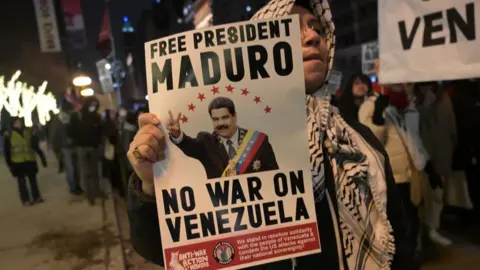
This past Monday, a handcuffed, jumpsuit-clad Nicholas Maduro exited a military helicopter in New York City, accompanied by armed federal agents.
The Venezuelan president had spent the night in a infamous federal jail in Brooklyn, prior to authorities transferred him to a Manhattan federal building to confront criminal charges.
The top prosecutor has stated Maduro was brought to the US to "face justice".
But legal scholars doubt the legality of the government's operation, and contend the US may have infringed upon global treaties concerning the military intervention. Domestically, however, the US's actions occupy a legal grey area that may nonetheless result in Maduro standing trial, irrespective of the events that led to his presence.
The US insists its actions were legally justified. The administration has charged Maduro of "narco-trafficking terrorism" and enabling the movement of "thousands of tonnes" of cocaine to the US.
"The entire team acted professionally, with resolve, and in full compliance with US law and standard procedures," the Attorney General said in a official communication.
Maduro has consistently rejected US claims that he runs an criminal narcotics enterprise, and in court in New York on Monday he entered a plea of innocent.
Global Legal and Action Questions
While the indictments are centered on drugs, the US prosecution of Maduro follows years of criticism of his rule of Venezuela from the broader global community.
In 2020, UN fact-finders said Maduro's government had perpetrated "egregious violations" that were crimes against humanity - and that the president and other top officials were implicated. The US and some of its partners have also alleged Maduro of rigging elections, and did not recognise him as the rightful leader.
Maduro's purported connections to criminal syndicates are the centerpiece of this prosecution, yet the US methods in bringing him to a US judge to answer these charges are also under scrutiny.
Conducting a military operation in Venezuela and whisking Maduro out of the country in a clandestine nighttime raid was "entirely unlawful under the UN Charter," said a expert at a institution.
Experts cited a host of issues presented by the US mission.
The UN Charter bans members from threatening or using force against other nations. It authorizes "self-defence if an armed attack occurs" but that threat must be imminent, professors said. The other allowance occurs when the UN Security Council approves such an action, which the US lacked before it took action in Venezuela.
International law would regard the narco-trafficking charges the US claims against Maduro to be a criminal justice issue, authorities contend, not a act of war that might warrant one country to take armed action against another.
In official remarks, the administration has framed the operation as, in the words of the Secretary of State, "primarily a police action", rather than an act of war.
Historical Parallels and US Jurisdictional Questions
Maduro has been formally charged on drug trafficking charges in the US since 2020; the justice department has now issued a revised - or revised - indictment against the South American president. The administration essentially says it is now carrying it out.
"The operation was conducted to facilitate an pending indictment related to massive narcotics trafficking and related offenses that have spurred conflict, created regional instability, and contributed directly to the drug crisis causing fatalities in the US," the Attorney General said in her remarks.
But since the mission, several legal experts have said the US violated treaty obligations by removing Maduro out of Venezuela without consent.
"One nation cannot invade another independent state and detain individuals," said an authority in international criminal law. "In the event that the US wants to detain someone in another country, the proper way to do that is a formal request."
Even if an individual is charged in America, "America has no authority to go around the world executing an arrest warrant in the jurisdiction of other ," she said.
Maduro's attorneys in court on Monday said they would dispute the propriety of the US mission which brought him from Caracas to New York.
There's also a long-running jurisprudential discussion about whether commanders-in-chief must comply with the UN Charter. The US Constitution views accords the country enters to be the "binding legal authority".
But there's a notable precedent of a previous government contending it did not have to comply with the charter.
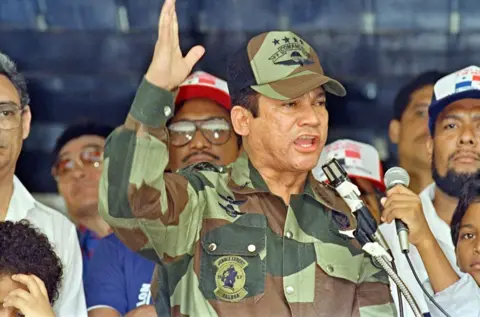
In 1989, the Bush White House ousted Panama's strongman Manuel Noriega and extradited him to the US to face narco-trafficking indictments.
An confidential DOJ document from the time argued that the president had the executive right to order the FBI to apprehend individuals who flouted US law, "even if those actions breach traditional state practice" - including the UN Charter.
The draftsman of that memo, William Barr, was appointed the US AG and brought the first 2020 accusation against Maduro.
However, the opinion's reasoning later came under criticism from legal scholars. US federal judges have not directly ruled on the question.
Domestic War Powers and Jurisdiction
In the US, the matter of whether this operation broke any federal regulations is multifaceted.
The US Constitution gives Congress the authority to authorize military force, but places the president in control of the military.
A Nixon-era law called the War Powers Resolution places restrictions on the president's power to use the military. It requires the president to notify Congress before sending US troops abroad "whenever possible," and notify Congress within 48 hours of deploying forces.
The government did not provide Congress a prior warning before the mission in Venezuela "due to operational security concerns," a top official said.
However, several {presidents|commanders


